Farragut, Tennessee: Established Neighborhoods, Greenways, and Knoxville Convenience
Farragut, Tennessee, offers a polished suburban setting in western Knox County with established neighborhoods, recreation, shopping, and easy access to the greater Knoxville area. The town covers about 16 square miles and sits along the I-40 and I-75 corridor, placing major employment centers, universities, medical facilities, and regional attractions within a practical drive. Residents have convenient access to Turkey Creek, local restaurants, community parks, greenways, and year-round programs at the Farragut Community Center. The town also has a strong connection to East Tennessee history, with sites tied to Campbell’s Station, the Civil War, and Admiral David Farragut. Residential choices range from mature neighborhoods with wooded lots to newer planned communities with extensive amenities. For homebuyers who want suburban space, daily conveniences, outdoor recreation, and a direct connection to Knoxville, Farragut provides a broad mix of options in one of East Tennessee’s most established communities.
How Did Farragut, Tennessee, Take Shape?
Long before Farragut became an incorporated town, the area was known as Campbell’s Station. David Campbell settled here in the late 1700s, and the community developed along an important travel route through East Tennessee. The Campbell Station Inn, built in the early 1800s, served travelers, hunters, and livestock drivers passing through the region. The building still stands near Kingston Pike and Campbell Station Road and remains one of Farragut’s most recognizable historic sites.
The area also played a role in the Civil War. On November 16, 1863, Union forces under General Ambrose Burnside and Confederate forces under General James Longstreet fought the Battle of Campbell Station on land around present-day Farragut. Another important local connection is Admiral David Glasgow Farragut, who was born in the area in 1801 and later became the first admiral of the United States Navy. The town was named in his honor, and the Admiral Farragut Memorial Plaza at Town Hall includes a bronze statue, historic markers, and Civil War-era cannons.
Farragut incorporated on January 16, 1980. As the community grew, local leaders focused on zoning, building standards, signage, road improvements, parks, green space, and pedestrian connections. Today, the Farragut Museum, Campbell Station Inn, Founders Park at Campbell Station, and the Farragut History Walk help preserve that local history. These resources give residents a clear view of how the area developed from an early settlement into a modern suburban town.
Homes for Sale
What Is Everyday Life Like in Farragut, Tennessee?
Farragut gives residents plenty of ways to spend time outside. The town maintains five parks and more than 20 miles of greenway trails that connect residential areas, recreational spaces, and commercial destinations. Mayor Bob Leonard Park includes athletic fields and courts, while Anchor Park offers fishing access, walking areas, playgrounds, and picnic space. McFee Park provides additional recreation facilities, and Founders Park at Campbell Station combines open space with historical interpretation. Greenways throughout town support walking, running, cycling, and everyday neighborhood connections.
Shopping and dining are concentrated along Kingston Pike, Campbell Station Road, and the Turkey Creek area. Turkey Creek offers a large collection of national retailers, restaurants, entertainment, and everyday services. Smaller commercial centers add local bakeries, restaurants, specialty shops, fitness businesses, and professional services. Farmers markets also appear on the local calendar, including the Dixie Lee Farmers Market and the Farmers Market at Pinnacle Turkey Creek, giving residents access to produce, baked goods, crafts, and regional vendors.
Community activities are easy to find throughout the year. The Farragut Community Center hosts fitness classes, recreation programs, art activities, open gym sessions, and special events. Annual traditions include the Independence Day Parade, Freaky Friday Fright Nite, the Bob Watt Youth Fishing Rodeo, and the holiday Countdown to Light the Park. The Farragut Museum and Campbell Station Inn add history programs and exhibits, while local concerts, outdoor movies, and seasonal gatherings create regular opportunities to take part in town life.
Which Neighborhoods Stand Out in Farragut, Tennessee?
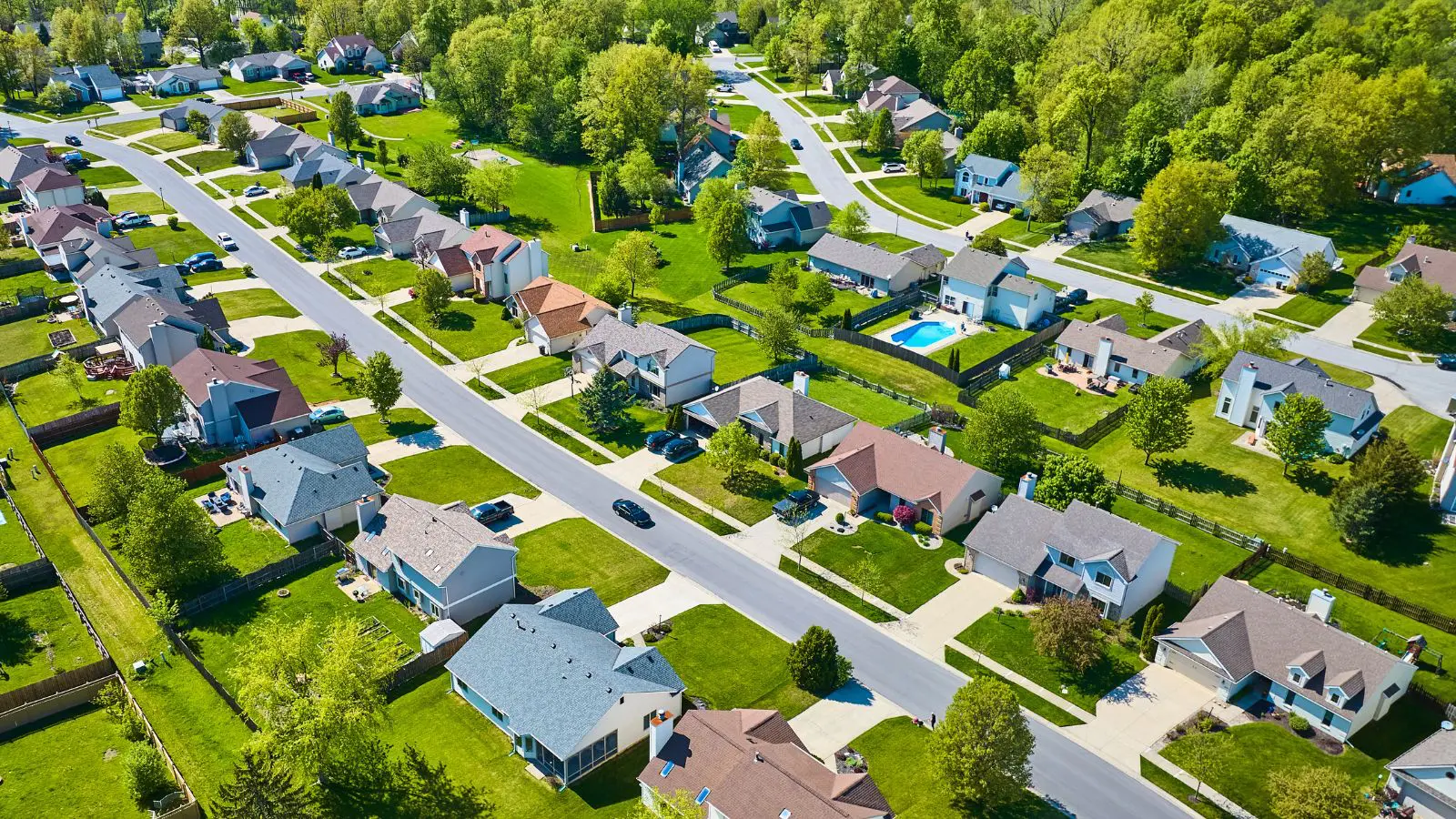
Farragut’s residential areas include communities developed over several decades so that buyers can compare architectural styles, lot sizes, community amenities, and locations throughout town. Some neighborhoods sit close to Kingston Pike and Turkey Creek, while others offer wooded settings, golf course surroundings, or newer luxury construction.
Village Green: Village Green is one of Farragut’s established residential communities, with mature landscaping, traditional homes, and neighborhood amenities. The subdivision serves more than 400 households and includes two swimming pools, tennis courts, basketball courts, playgrounds, picnic areas, wooded recreation space, and a clubhouse. Its central Farragut location keeps schools, shopping, dining, and major roads close by. Buyers who appreciate an older neighborhood with community facilities and developed tree cover often include Village Green in their search.
Fox Den: Fox Den is closely associated with the Fox Den Country Club and its golf course setting. Homes vary in age, size, and architectural style, giving the neighborhood more variety than many newer planned developments. Mature trees and established landscaping are common throughout the area. Its location near Kingston Pike, Farragut schools, parks, and Turkey Creek makes everyday errands convenient. Golf and club amenities are available through the private country club, while the surrounding neighborhood provides a recognizable residential setting in central Farragut.
Concord Hills: Concord Hills is one of the earlier subdivisions developed in the Farragut area. The neighborhood is known for custom homes, larger wooded lots, rolling terrain, and streets that reflect the area’s established suburban character. Some properties have views toward the surrounding hills, mountains, or nearby water. Its location off Concord Road gives residents access to Kingston Pike, local schools, parks, and shopping while maintaining a residential setting. Buyers interested in homes with individual architectural character and more mature surroundings may find Concord Hills especially appealing.
Fox Run: Fox Run sits in western Farragut with convenient access to Kingston Pike, I-40, and Turkey Creek. The subdivision has an active homeowners association and neighborhood amenities that include swimming pools, tennis facilities, walking areas, and gathering spaces. Community events are held throughout the year, adding an organized social component for residents who want it. Homes are set along landscaped streets away from the busiest commercial corridors, while shopping, restaurants, schools, and commuter routes remain within a short drive.
Bridgemore: Bridgemore represents the newer luxury side of Farragut housing. The master-planned community covers hundreds of acres and incorporates custom homes, landscaped common areas, green space, water features, and neighborhood amenities. The community includes a clubhouse and pool area, and its larger homesites and newer construction appeal to buyers seeking more space and upscale finishes. Bridgemore’s Farragut location keeps major shopping areas, schools, parks, and regional roads accessible while offering a distinct residential environment.
Together, these neighborhoods show the range available within Farragut. Buyers can compare established subdivisions with mature trees, recreation-focused communities, golf course settings, custom homes, and newer luxury developments while remaining close to the same town services and regional conveniences.
What Schools Serve Farragut, Tennessee?
Knox County Schools serve public school students in Farragut. The town’s four primary public campuses are Farragut Primary School, Farragut Intermediate School, Farragut Middle School, and Farragut High School. Farragut Primary serves kindergarten through second grade, while Farragut Intermediate serves grades three through five. Farragut Middle offers academics alongside STEM programming, arts education, honors coursework, athletics, performing arts, and student clubs.
Farragut High School offers a wide range of advanced and career-focused opportunities. Its 865 Academies model begins with a Freshman Academy, followed by career-themed pathways in business, STEM and design, and health and human services. Students can also pursue Advanced Placement and honors courses, dual enrollment, industry certifications, and other early postsecondary opportunities. Dual enrollment options can connect students with institutions such as Pellissippi State Community College, East Tennessee State University, Tennessee College of Applied Technology, and Lincoln Memorial University.
Private and parochial options are also available in and around Farragut. St. John Neumann Catholic School serves preschool through eighth grade and includes academics, faith formation, arts, Spanish, physical education, and middle school fine arts electives. Concord Christian School serves students through high school with a college-preparatory Christian curriculum. Knoxville Christian School provides another nearby private Christian option.
Higher education is readily accessible. Pellissippi State Community College’s Hardin Valley Campus is close to Farragut and offers career programs, transfer pathways, arts facilities, and student recreation. The University of Tennessee, Knoxville provides undergraduate, graduate, research, and athletic opportunities within the Knoxville area, giving residents access to a major public university without leaving the region.
What Is the Climate Like in Farragut, Tennessee?
Farragut experiences four distinct seasons. The area receives roughly 48 to 53 inches of precipitation annually, averages about 6 inches of snow, and sees approximately 203 sunny days in a typical year. July average highs are around 88, while January average highs are near 46. Rain falls throughout the year, supporting the green lawns, wooded neighborhoods, and landscaped parks common across East Tennessee.
Spring brings gradually warmer afternoons, flowering trees, and regular rainfall. Temperatures often move through the 60s and 70s as the season progresses, making parks and greenways increasingly active. Summer is warm and humid, with many afternoons reaching the upper 80s. Shade, pools, lakes, and indoor recreation become especially useful during the hottest part of the season.
Autumn brings cooler mornings and comfortable afternoons, along with the changing foliage associated with East Tennessee. Daytime temperatures commonly move from the 70s into the 60s as the season advances. Winter is cooler but generally moderate, with average January lows around 30 and occasional snowfall. Cold spells and winter weather do occur, but long periods of heavy snow are uncommon. The overall climate supports outdoor recreation during much of the year.
How Convenient Is Transportation in Farragut, Tennessee?
Farragut’s location on the western side of Knoxville gives drivers access to several important regional routes. I-40 and I-75 run along the northern side of town, while Kingston Pike serves as the primary east-west commercial corridor. Campbell Station Road provides a major connection between residential areas, Kingston Pike, Turkey Creek, and the interstate. I-140, commonly known as Pellissippi Parkway, is also nearby and provides connections toward Oak Ridge, Alcoa, and Maryville.
The town is primarily oriented around automobile travel, although local planning has created more options for shorter trips on foot or bicycle. Farragut’s greenway network connects many neighborhoods and parks, and sidewalks are present along several major roads and newer developments. A commuter lot at Campbell Station Road and Campbell Lakes Drive supports carpooling for residents traveling toward downtown Knoxville or the University of Tennessee and also serves as a trailhead for the Grigsby Chapel Greenway.
Air travel is convenient through McGhee Tyson Airport in Alcoa, about 15 miles from Farragut. The airport serves the Knoxville metropolitan area and provides nonstop service to numerous destinations. Farragut also offers practical access to downtown Knoxville, Oak Ridge, Maryville, Alcoa, and Loudon County, which expands employment, education, healthcare, entertainment, and recreation choices across the region.
Are You Ready to Make Farragut Home?
Farragut combines established residential areas, newer communities, local history, recreation, schools, shopping, and regional access in one well-developed East Tennessee town. Greenways and parks create room for outdoor activity, while Kingston Pike and Turkey Creek keep everyday shopping and dining close. Farragut’s location near Knoxville also puts universities, major employers, healthcare, entertainment, the airport, and the Tennessee outdoors within practical reach.
Homebuyers can choose from neighborhoods with mature trees and custom homes, golf course communities, amenity-rich subdivisions, and newer luxury properties. That variety makes it easier to match a home search with preferred location, design, lot size, and lifestyle priorities. If Farragut sounds like the right place for your next home, contact me to learn more about available properties, neighborhood options, and the local real estate market. I would be happy to help you explore Farragut and find a home that fits what you are looking for.